EGFR Mutation Genotyping and SHOX2/RASSF1A Lung Cancer Methylation Testing: A Two-Assay Molecular Workflow on Real-Time PCR
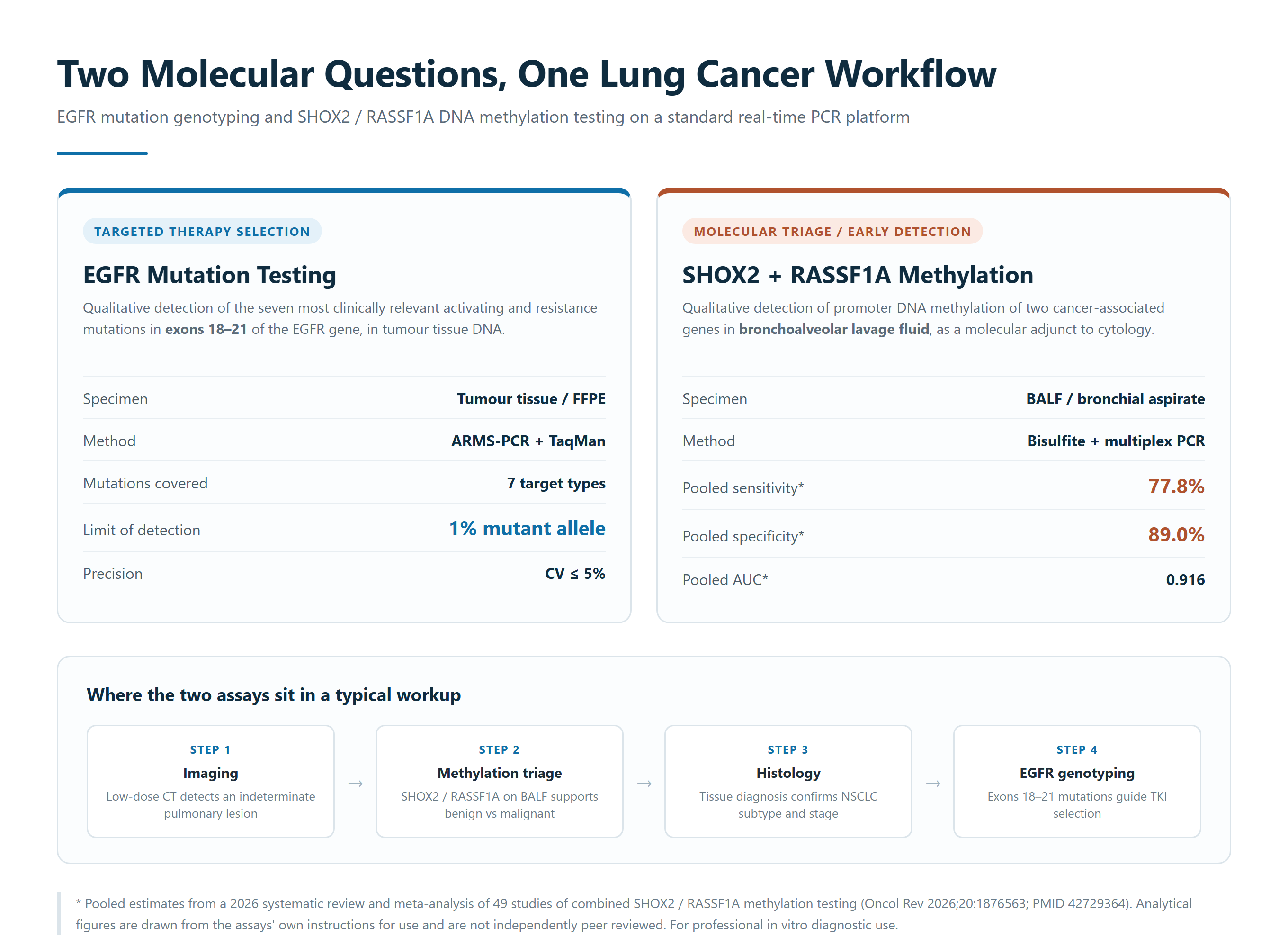
EGFR Mutation Genotyping and SHOX2 / RASSF1A Lung Cancer Methylation Testing: A Two-Assay Molecular Workflow on Real-Time PCR Lung cancer in never-smoking populations has become one of the more closely studied puzzles in thoracic oncology, and one line of evidence points to a disease that is molecularly distinct from the smoking-associated form. In 2020, a study published in Cell set out to characterise that disease directly. The researchers behind “Proteogenomics of Non-smoking Lung Cancer in East Asia Delineates Molecular Signatures of Pathogenesis and Progression” conducted a deep proteogenomic analysis of a prospectively collected cohort of lung adenocarcinoma patients in Taiwan, representing early-stage, predominantly female, non-smoking disease. Their integrated approach combined genomic, proteomic and phosphoproteomic profiling of tumour tissue to define the molecular attributes of this population and to trace the hallmarks of tumour progression [4]. The central finding concerned driver mutations. EGFR mutations were the predominant driver alteration in this never-smoker cohort — the study's own summary describes the disease as being characterised by “predominant EGFR mutations,” in contrast to the far smaller share of EGFR-driven tumours found in smoking-associated lung cancer. Mutational signature analysis further revealed age- and gender-related mutagenesis mechanisms: a high prevalence of an APOBEC mutational signature in younger females, and an over-representation of environmental-carcinogen-like mutational signatures in older females. A proteomics-informed classification distinguished the clinical characteristics of early-stage patients with EGFR mutations, and integrated protein network analysis nominated candidate biomarkers for patient stratification